Epsilon Marketing Engine Tool
Bringing order to a complex marketing engine with a system model.
At a glance
- Company
Epsilon
2015
- Role
Product Designer and Product Manager
- Team
An engineering lead.
- Responsibilities
Product design, including the system diagram, UI requirements, task flows, and wireframes.
- Goal
Design the UI for the Moment Engine: search and view "moments," turn on event learning, and review and approve event attributes in the administrator flows.
- Outcome
A system diagram, a review of the product owner's early documents, a UI requirements document, the administrator task flow, and wireframes.
Alliance Data wanted to redesign The Moment Engine, an enterprise white-label product to help marketers plan loyalty and marketing campaigns. I was asked to help frame the challenge: “How might we create a product that marketers, with little technical knowledge, could easily access and operate?” This was a highly technical product with "event learning" and "approve event attributes" that needed a clear message.
Developing a Mental Model
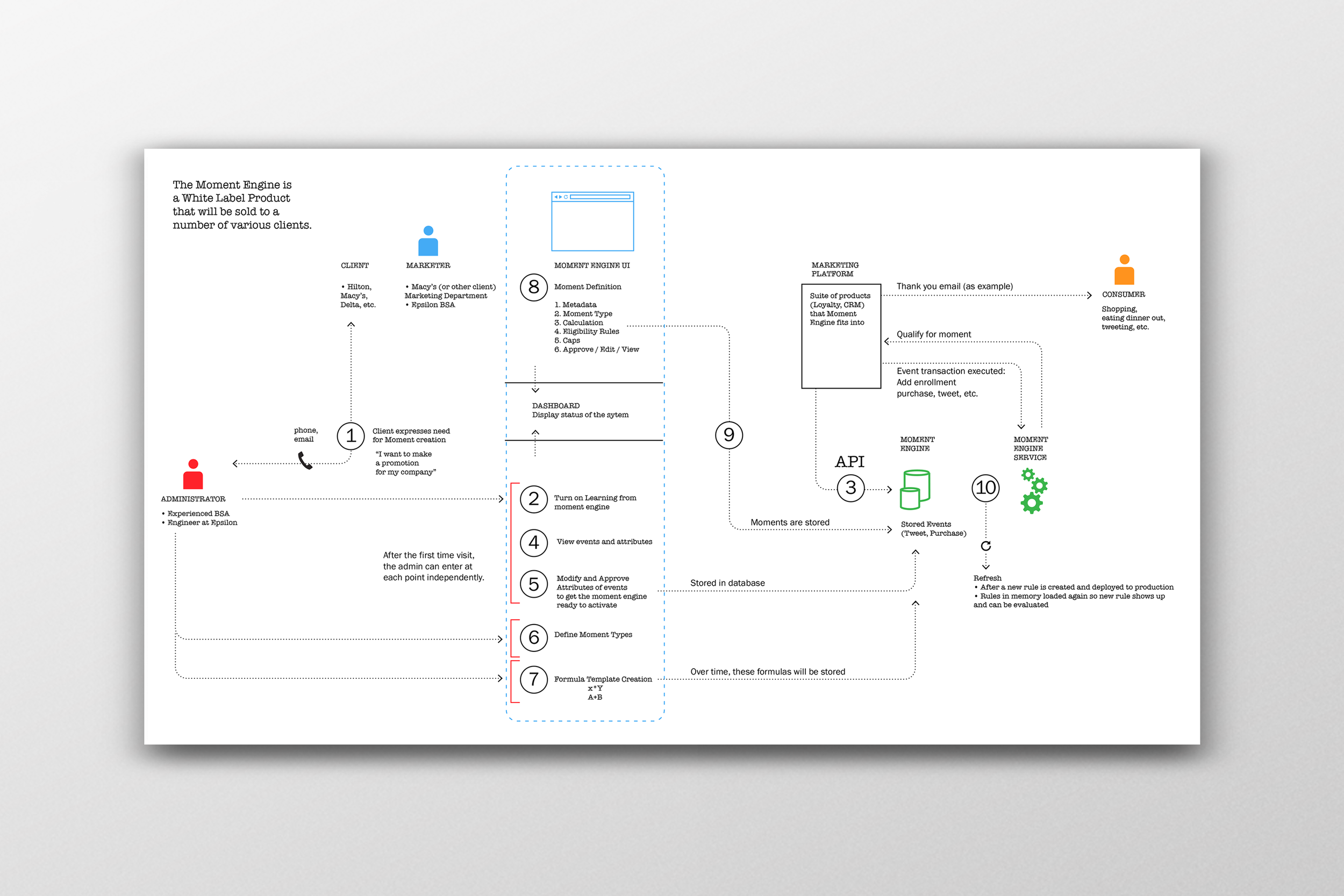
The Moment Engine is a white-label product sold to clients such as Hilton, Macy's, and Delta to help them manage promotional currency. Consulting with the lead engineer, I developed a system diagram that isolated the interface components. We used this diagram as a reference when building the product requirements. We believed that if we documented the system model first, the stakeholders and engineering lead could agree on what we were building before anyone designed a screen.
Documenting the Domain
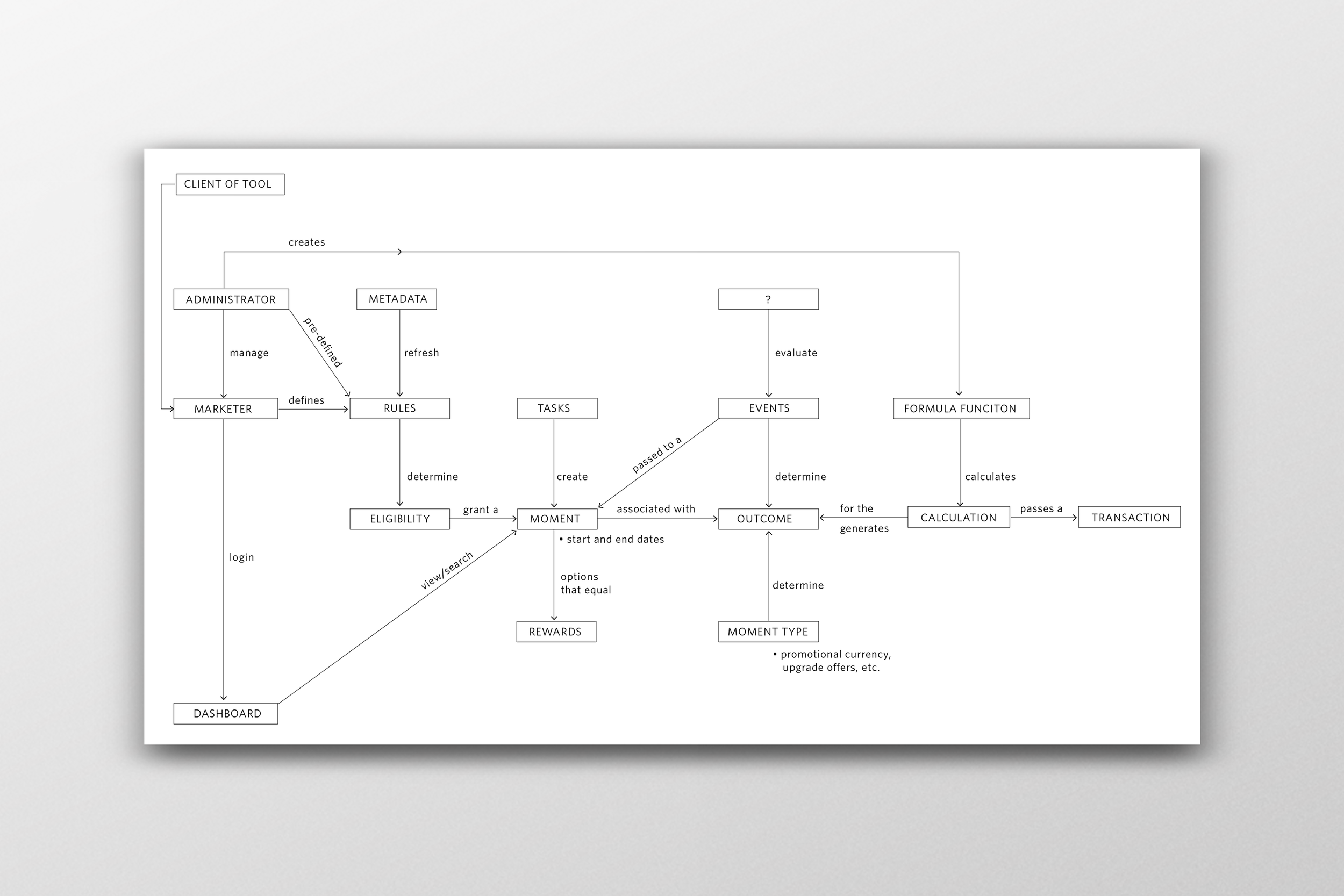
Documenting the domain helped to clarify the elements we were designing for in the system. This was a key moment that drove the project forward. We connected the administrator, marketer, metadata, rules, eligibility, events, moments, outcomes, calculations, and transactions to understand the bigger picture.
Actualize Feature Requirements
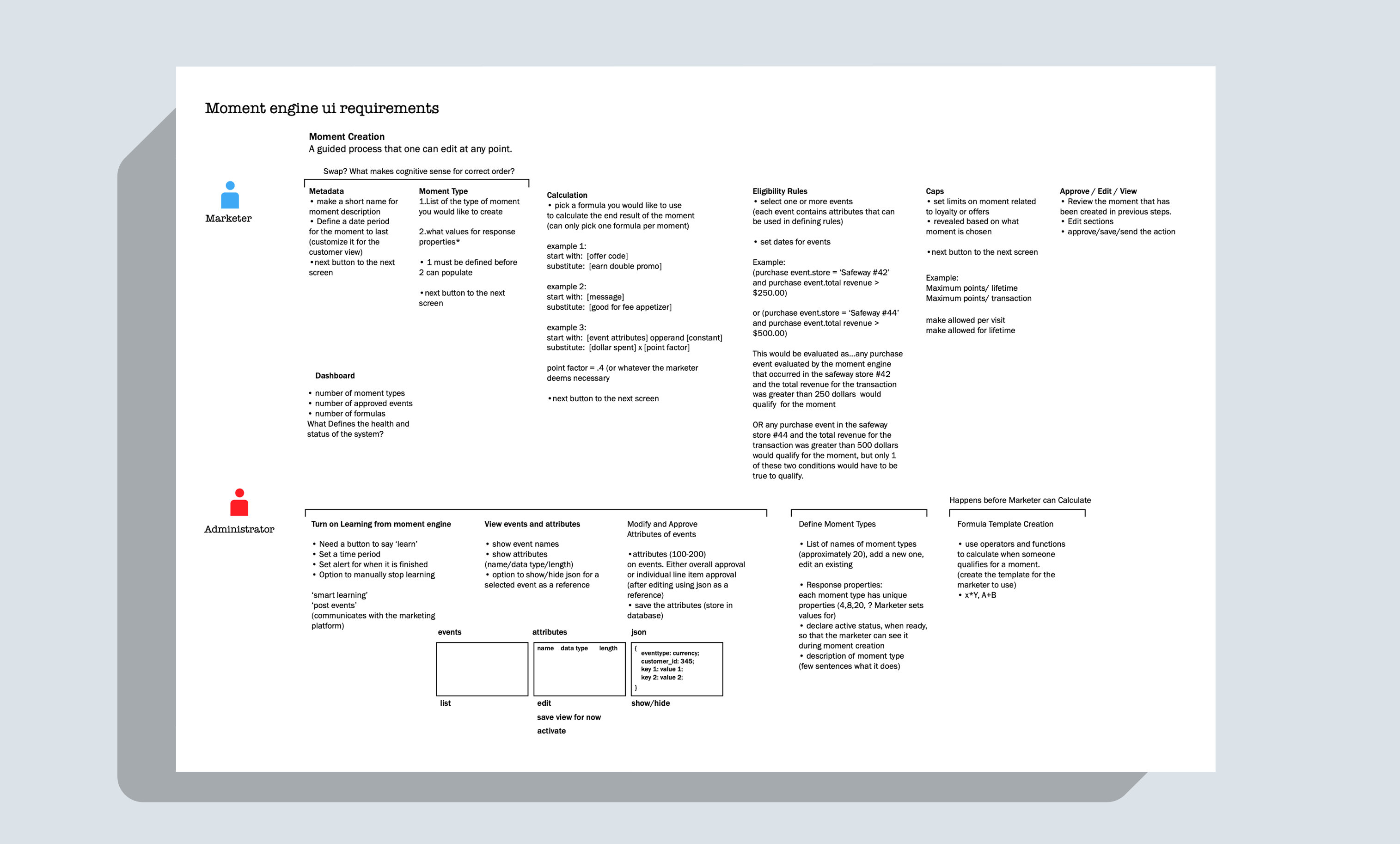
Creating a map of the marketer and administrator process flows connected to the system diagram. I framed the project, wrote requirements with the engineering lead, and created product wireframes.
Building a Shared Model
After outlining requirements, I reviewed the product owner's early documents and prioritized the features. With everyone working from the same model, we could then design the wireframes.
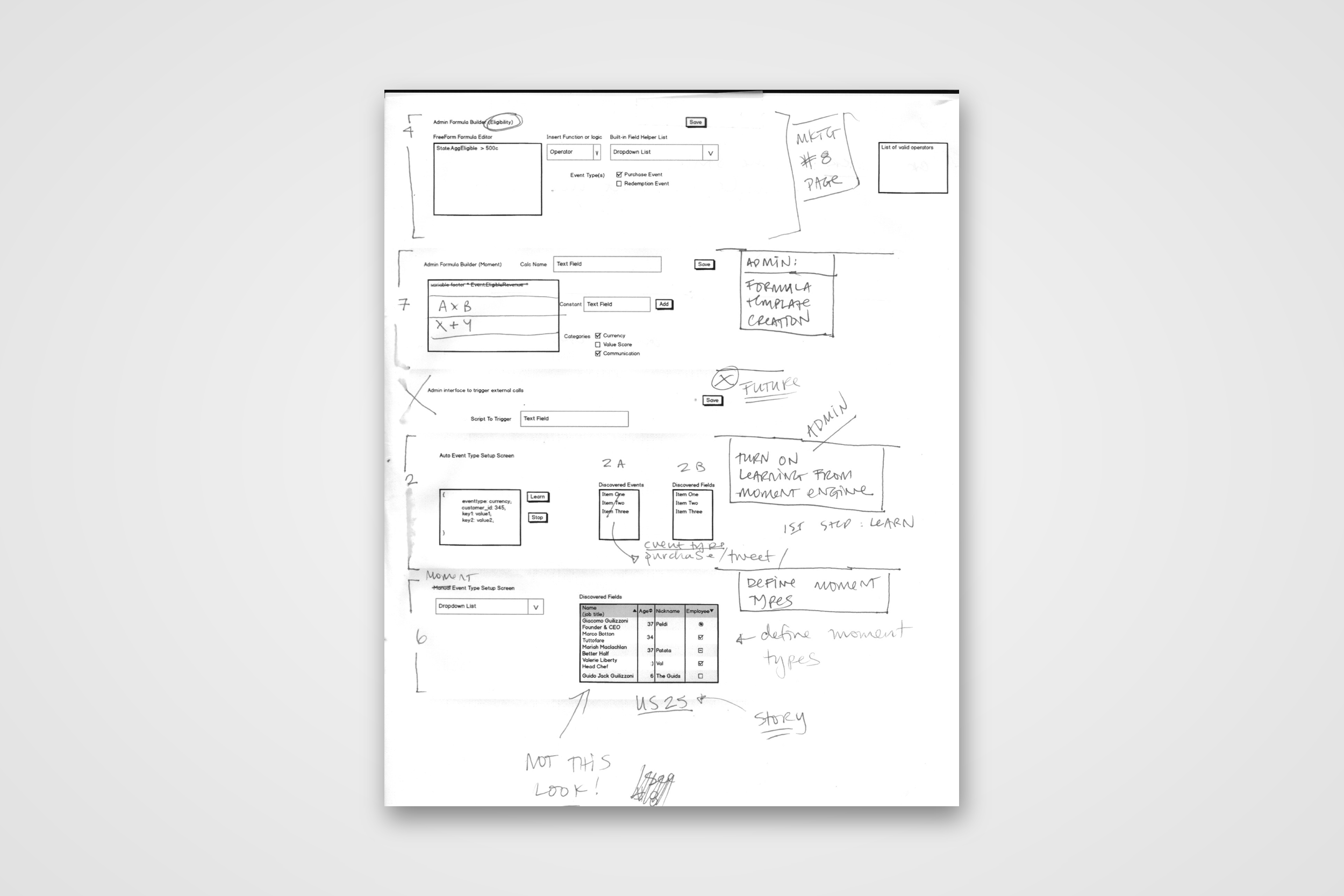
Wireframing the Administrator Flows
Marketers and administrators could search for and view moments from the dashboard, while administrators could enable event learning and then review and approve each event's attributes.
Order from a system model
Documenting the system model first, then designing wireframes, removed the chaos among stakeholders and the engineering lead. The team shared one model of how the Moment Engine worked. I delivered a system diagram, UI requirements, the administrator task flow, and wireframes to delineate the flows.
Learnings
My effort in this project focused on gathering the requirements and mapping the system to learn what the Marketers and Administrators needed from this tool. Although I advocated for research, the product team was determined to develop the first release without it.